
A manufacturing delay does not always come with a clear warning. It can begin with a missing part, a late supplier, or an important task hidden in a busy production schedule. By the time teams notice the importance of the problem, it has already pushed out planned delivery dates. Decision Flow helps companies understand these situations before they become difficult to manage. It replaces manual calculations, spreadsheets, reports, and meetings with insights and guidance from a digital twin of factory operations. By connecting with existing MRP and MES systems, the platform keeps track of changing conditions and shows teams which developments could affect customer deliveries and inventory build-up.
Manufacturers now have more data than ever, yet knowing what deserves attention can still be difficult. Planning systems may generate hundreds of exceptions when materials are delayed, orders fall behind, or schedules change. Decision Flow’s Production Manager helps cut through the noise and focus on the issues that truly matter. As the company explains, “Instead of spending most of the time trying to find problems, companies can spend that time working to fix the problems,” says Ed Hoffman, CEO.
This becomes especially valuable in high-mix, low-volume manufacturing, where products can involve hundreds of parts and several stages of assembly. A component may have little value on its own, yet its absence can hold up an entire build. In one example, a low-cost part needed to be ordered months in advance. Missing that requirement placed a much larger assembly at risk. Decision Flow helps reveal these dependencies across the production network, allowing teams to understand how individual materials and tasks can influence the outcome.
Manufacturers are often highly focused on what is happening over the next month or two, even when decisions made today can affect production much further ahead. Decision Flow extends that view across the planning horizon, showing how current material constraints, orders, and scheduling choices may influence deliveries six months or even several years later. The philosophy is captured in a simple objective: “Anticipate issues before they impact deliveries,” Hoffman notes.
The platform also looks beyond delivery dates and gives companies a clearer view of inventory. Decision Flow can show when expected deliveries are going to fall short even though inventory levels are higher than planned, helping teams investigate the real cause instead of simply buying more materials. It identifies which orders need to be rushed and which purchases can be delayed, giving manufacturers greater control over inventory and working capital without putting important deliveries at risk.
Decision Flow Production Manager also gives each function its own action plans – based on a common picture of the operation. Planners, program managers, buyers, and operations personnel receive role-based insights, while management gets the transparency needed to ensure priorities are being addressed across all shop functions. Because the software connects with existing systems and regularly updates to reflect current demand, material availability, and operational conditions, departments are not forced to work from disconnected versions of the truth. Users can also configure the system around their own operations, test different scenarios, adjust assumptions and priorities, and tailor the interface to the information most relevant to their responsibilities.
At the heart of the technology is a secure, closed AI model that creates the digital twin and continuously evaluates changing conditions. Yet the company does not position AI simply as another source of information. Its purpose is to help people interpret the information already being generated across the factory. “We don’t just focus on reporting what is happening, but on identifying what matters most to your business, why it matters, and what to do about it,” Hoffman explains. That focus gives Decision Flow a distinct approach to manufacturing intelligence, particularly because its AI engine considers delivery and working capital improvements together rather than treating them as separate objectives. Speed is also an important part of Decision Flow’s approach. The platform can be implemented in about seven to twelve weeks, allowing manufacturers to start using it within a relatively short timeframe.
For the leadership team, the real value of Decision Flow lies in changing how people spend their time. Instead of repeatedly collecting information from different systems and trying to determine what deserves attention, teams can work from a shared view of the operation and focus their efforts on decisions that require human judgment. The goal is simple: “Management wants no surprises.” Hoffman points out.
That practical focus also shapes Decision Flow’s future. The company plans to continue expanding its decision intelligence capabilities and strengthening scenario planning so organizations can examine even more alternatives, evaluate risks, and make better choices. It is also investing in Responsible AI through secure, closed model architectures intended to provide actionable insights without compromising data security, while strategic partnerships are expected to contribute to more connected and responsive operations.
The company’s broader ambition is summed up in another statement from its leadership: “The future of manufacturing will belong to organizations that can turn operational complexity into confident, data-driven decisions,” Hoffman explains. For Decision Flow, achieving that vision means moving beyond simply knowing what is happening inside a factory. It means understanding how materials, schedules, customer commitments, and working capital influence one another, and giving people the context they need to make informed choices. In an environment where a small overlooked component can eventually affect a major delivery, that broader perspective can make a meaningful difference.
Ed Hoffman, CEO
decisionflow.com
“We don’t just focus on reporting what is happening, but on identifying what matters most to your business, why it matters, and what to do about it”
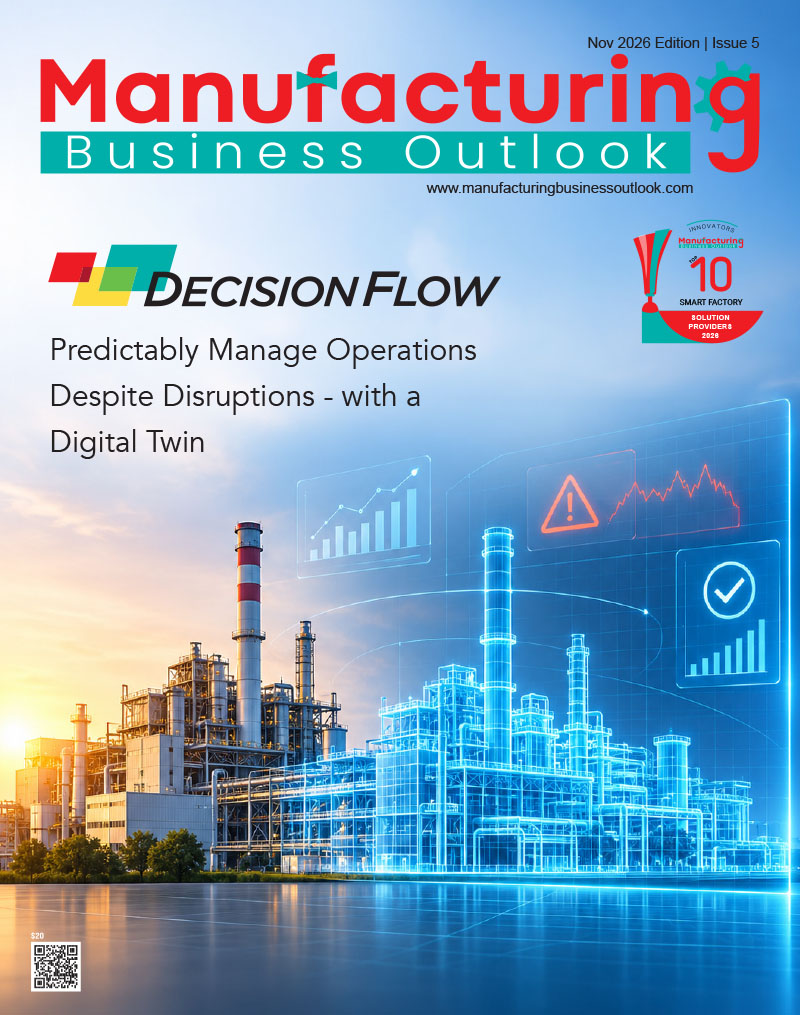
Manufacturing Business Outlook is a dedicated magazine to providing valuable insights and comprehensive coverage of the trends, challenges, and opportunities shaping the manufacturing landscape today.
We respect your privacy. The email address you provide will be used solely for subscription purposes and will not be stored or shared.
Subscribe Now
