

As manufacturing plants today run closer to full capacity, in some cases over capacity. Keeping your machines running at full rate can be a struggle. As our availability of qualified maintenance technicians decreases the challenge of maintaining our assets becomes more challenging. In the past our Reliability Programs relied on monthly inspections using things like Vibration monitoring, IR (Thermal) Inspections, Ultrasound routes, Motor testing and time-based Preventive Maintenance (PM) tasks. The other challenge we have is the availability of spare parts and qualified specialists to do some of the repairs or maintenance our machines now require. Our machines are becoming more complicated because of automation and computer controls.
These topics can be heard in almost every manufacturing facility I go into today. In the not-so-distant past we would shut the machines down and do inspections on a time-based frequency. Maybe the schedule was weekly, monthly or quarterly. Then do the repairs as we found issues in some cases even replacing parts that were fine because the manufacture told us to. This increased our expenses for running the plant, reduced production rates as we took system offline to do this work and increased our cost of maintaining spare parts in our warehouse.
Today we are losing the skilled technicians that used to maintain the machines and perform the different Predictive Maintenance (PdM) technologies. These technologies allowed us to do non-intrusive testing many times, eliminating the need to shut down the systems. We relied on things like Vibration, IR, Ultrasound, Motor Testing and so on. Because of tighter production schedules, increasing cost of replacement parts, and longer lead times to getting these parts we have to be smarter on how we maintain and monitor our machines today.
Collecting machine data with the different technologies is becoming simpler with the increased availability of online monitoring systems. Thinking about Vibration analysis I used to collect data on between 700 and 1150 machines a month. Now by using the online options that number is limitless. The cost of these systems are also coming down as the systems get better because of advancing technology in many cases related to cost of the sensors and how we communicate with them throughout the plants. The larger challenge is analyzing all that data and making quality recommendations to address the anomalies found.
I do not believe AI and ML will replace the human in the loop. However, with all the trillions of data alerts that come out of these monitoring systems they can help screen out the noise. They can then send out notifications about the points that are changing and with AI give the potential cause of the changes it sees. Then the analyst can verify the anomaly and advance a quality recommendation on how to address the change. They may also need to adjust the alarms to help reduce these false positives as they pop up. This will constantly improve the AI’s ability to flag actual changes that need to be addressed.
AI and the correct sensors can tell me that the vibration is increasing on the pump that’s in the basement tunnel where no one typically goes. ESA can tell me the motor on the robot arm is showing increase current levels suggesting early mechanical issues are developing. Ultrasound sensors can alert me to increase in high frequency noise telling me I need to lubricate a bearing. With the correct technology and equipment, it can actually lubricate the bearing with the correct amount of grease or alert a tech they need to go inspect that bearing without ever being in the plant. We are even to the point that I can set up sensors to monitor machine movement and flag one that’s showing increase that maybe structural in nature.
The point is that by increasing the use of technology and pairing that with the correct AI and person we can now focus on what’s actually changing and use our limited resources (People, Parts, Budgets) more effectively. But it takes commitment and knowing the correct applications for the problems we want to address at the right time.

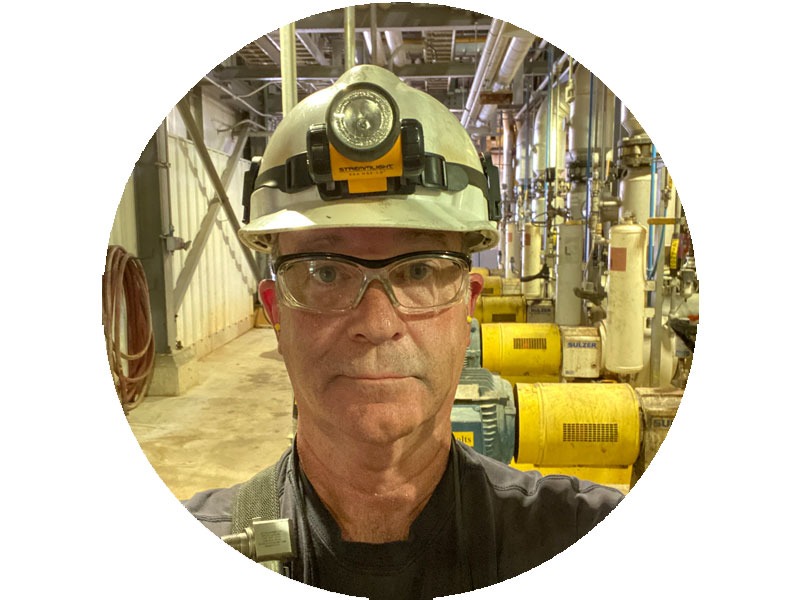
These are the tools I carried for over 30 years as part of my typical vibration route collection and troubleshooting process.
Now with the correct sensors and technology I can monitor machines and systems from my desk using the sensors from anywhere in the world. Then that data can also be scrubbed with AI or ML to flag what’s actually changing so I can address this and make quality recommendations to address the changes.
Add that change to the use of the internet I can use a team spread around the world working a daytime shift that can monitor and address the changes 24/7/365 allowing a better quality of life for these employees. This approach also means our operators and maintenance staff can have access to experienced analysts around the clock when needed. They can also use these system to trouble shoot developing machine changes.
Some of the things I used to find during route-based work or the PM work will not be found with technology alone. Some things will need to have a visual inspection done. However, we can educate our operators to do these visual inspections which frees up our skilled maintenance techs to focus on higher priority work that affects our bottom line.
Think about the changes we see in our cars today. When something happens, we get a warning light on the dash. The car seems to still be running fine so what’s going on? We drive the car to a service center, they hook up a computer, and it can tell us what happened or is in the process of failing. Then we can either fix it then if needed or schedule a date at a later time if it’s not an emergency and repair it when it fits our schedule or budget. Isn’t about time we started to use this same approach to maintaining our assets in out plants?